EU Border SecurityArchitecture
A conceptual software architecture for a national border security system, focusing on real-time data processing, threat detection, and multi-agency collaboration under strict EU regulations.
99.99%
Availability
< 1.5s
Response Time
0
RPO
< 4min
RTO
// Introduction & Context
The Border Control System (BCS) is a centralized European system aimed at improving the efficiency and security of border control at the external borders of the European Union, in accordance with EU Regulation 2017/2226 (EES) and the interoperability regulations EU 2019/817 and 2019/818.
The system manages extremely sensitive information, including alphanumeric and biometric data of Third-Country Nationals (TCNs), and must ensure high levels of security, availability, performance, and fault tolerance, meeting strict non-functional requirements.
End-to-end encryption, mTLS, and immutable audit trails for all border crossings.
Full adherence to EES, interoperability regulations, and GDPR requirements.
// System Diagrams
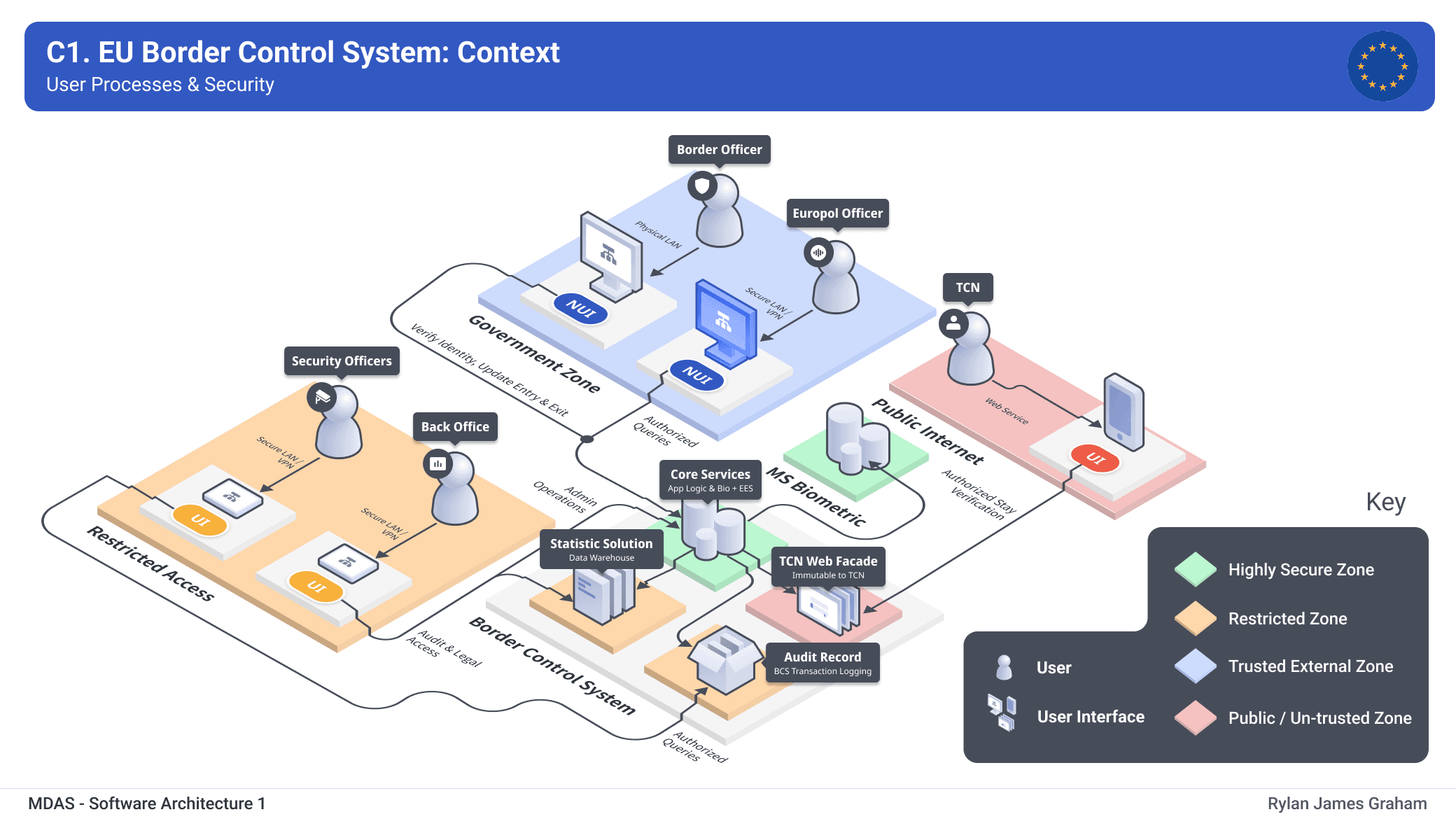
Operational context showing user roles, external systems, and security trust boundaries.
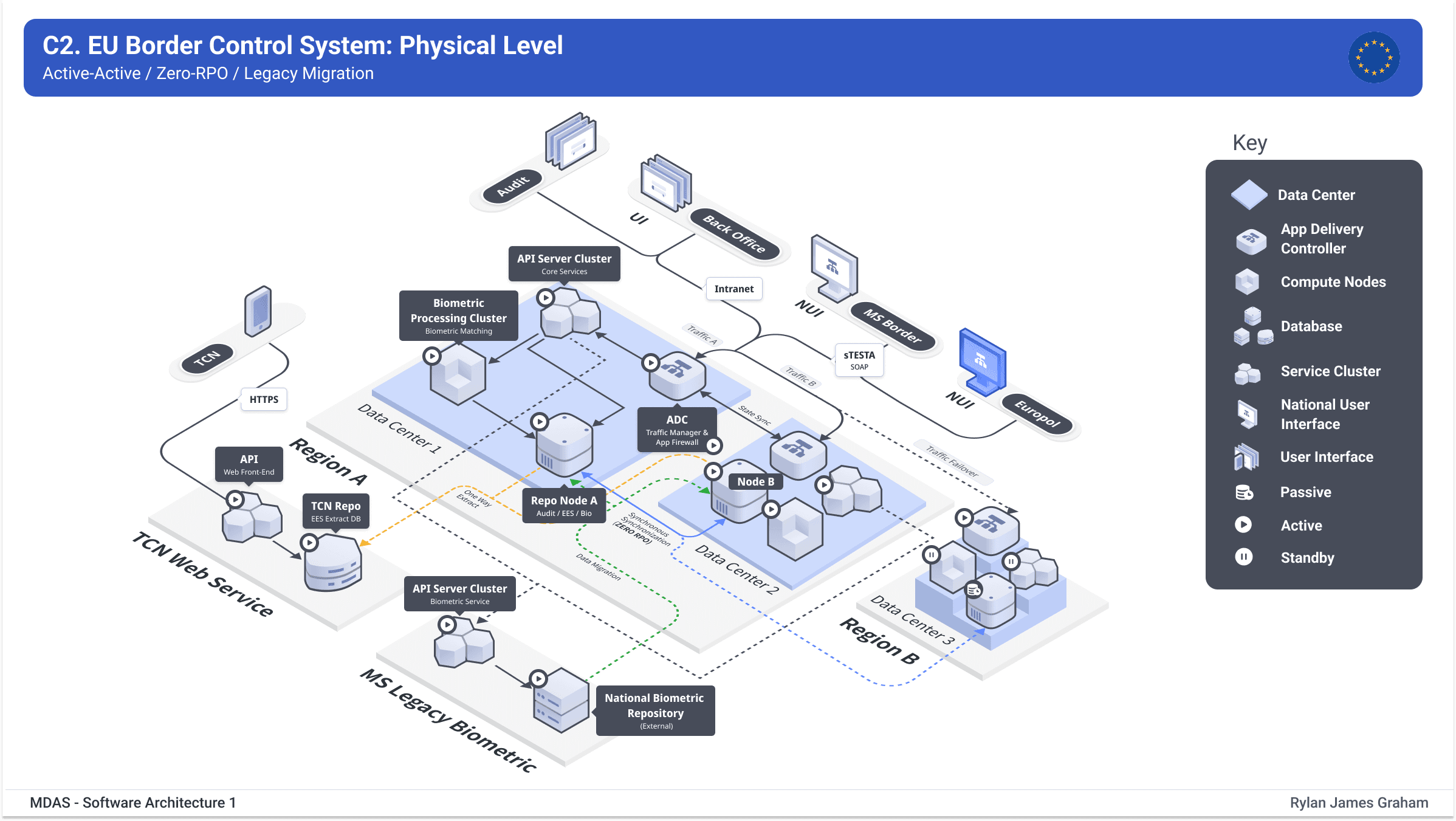
Multi-data center deployment achieving high availability and fault tolerance.
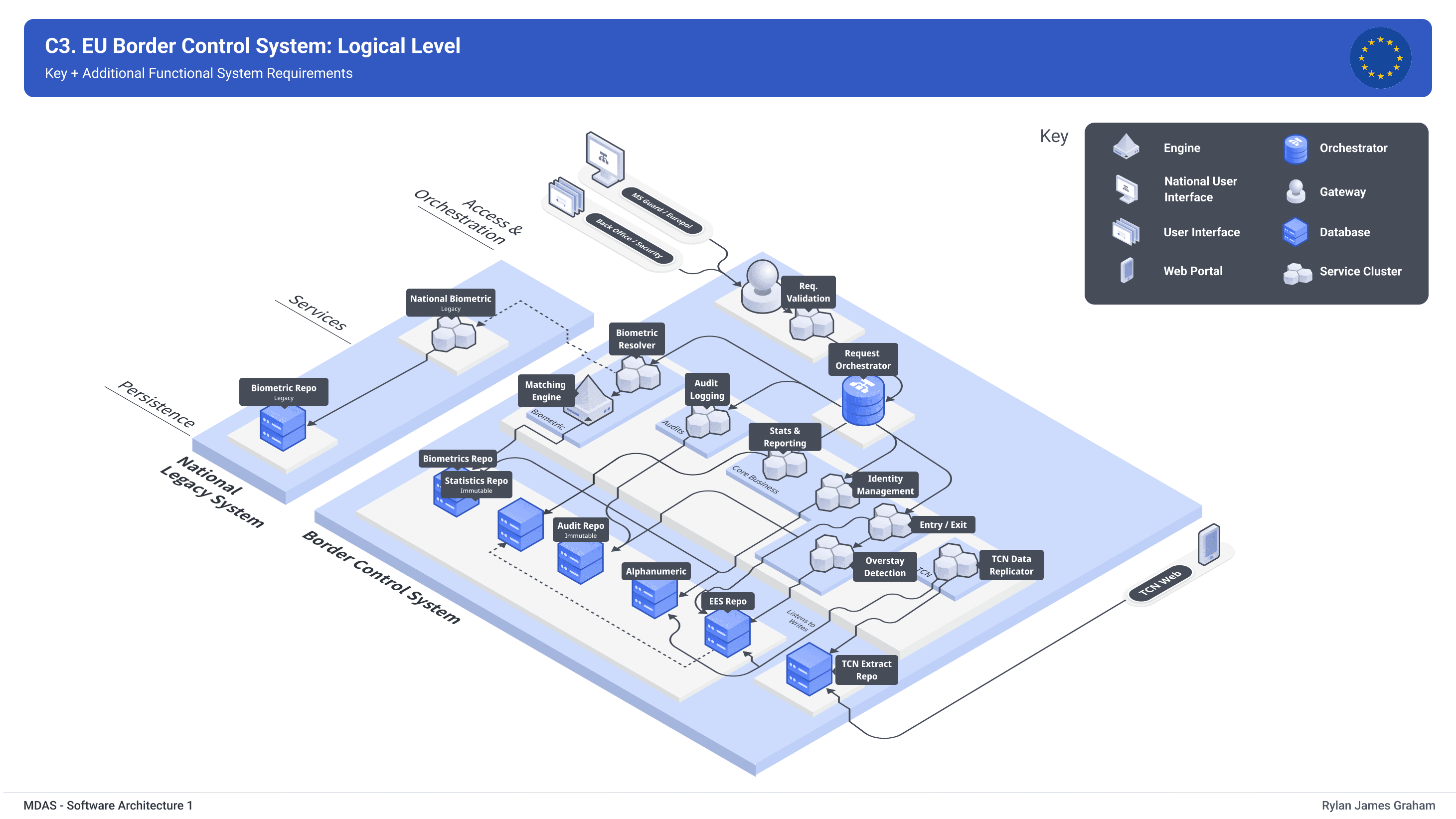
Logical decomposition into services, orchestration, and data repositories.